
Physical Therapy forJaw Pain, TMJ and Headaches
Temporomandibular disorders (TMD) are a common cause of jaw pain, clicking, locking, ear pain and headaches.
Many people don't realize physical therapy treats them.
At Method, TMD care is led by Melissa Stack, who has specialized in jaw and facial pain for more than 40 years.
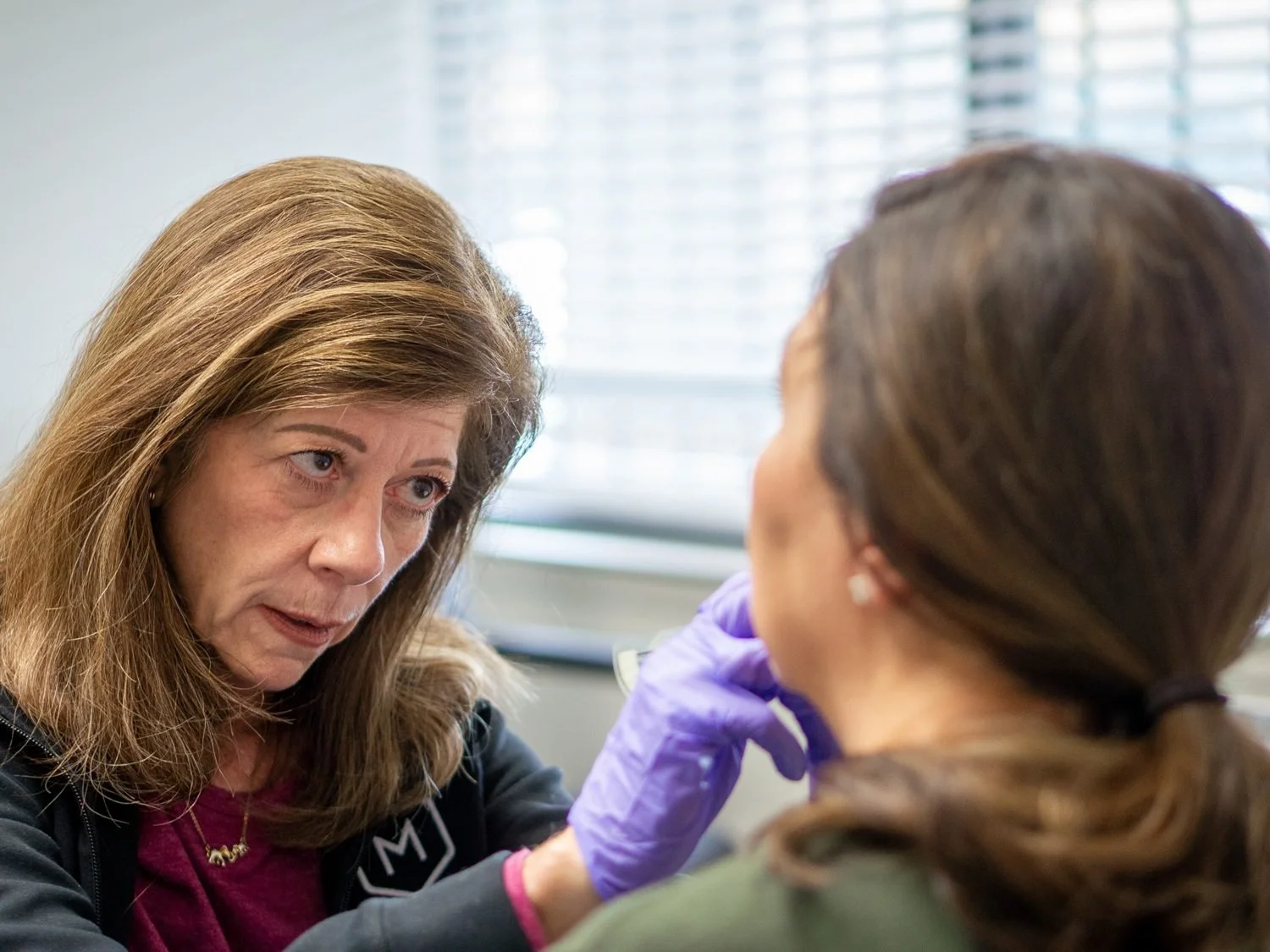
What is TMD?
Your temporomandibular joint (TMJ) connects your lower jaw to your skull, just in front of your ear. It moves every time you talk, chew, swallow or yawn.
Temporomandibular disorder, or TMD, is the name for pain or problems in those joints and in the muscles that move them. People often say "TMJ" when they mean TMD. It can involve the joint, the chewing muscles, or both. It often affects the neck and head as well.
TMD is common, and it's about twice as common in women as in men. Many cases settle on their own. When symptoms linger or keep coming back, an evaluation helps sort out what's driving them.
Common symptoms
- Jaw or face pain, or pain in front of the ear
- Pain when chewing, talking or yawning
- Clicking or popping that comes with pain
- A jaw that catches or locks, or won't open fully
- Headaches, often at the temples
- Ear pain or fullness with normal ear exams
- Sore jaw muscles on waking
- Neck and upper back tightness
Good to know:clicking without pain is common and usually doesn't need treatment. Pain, catching or locking is what's worth checking.
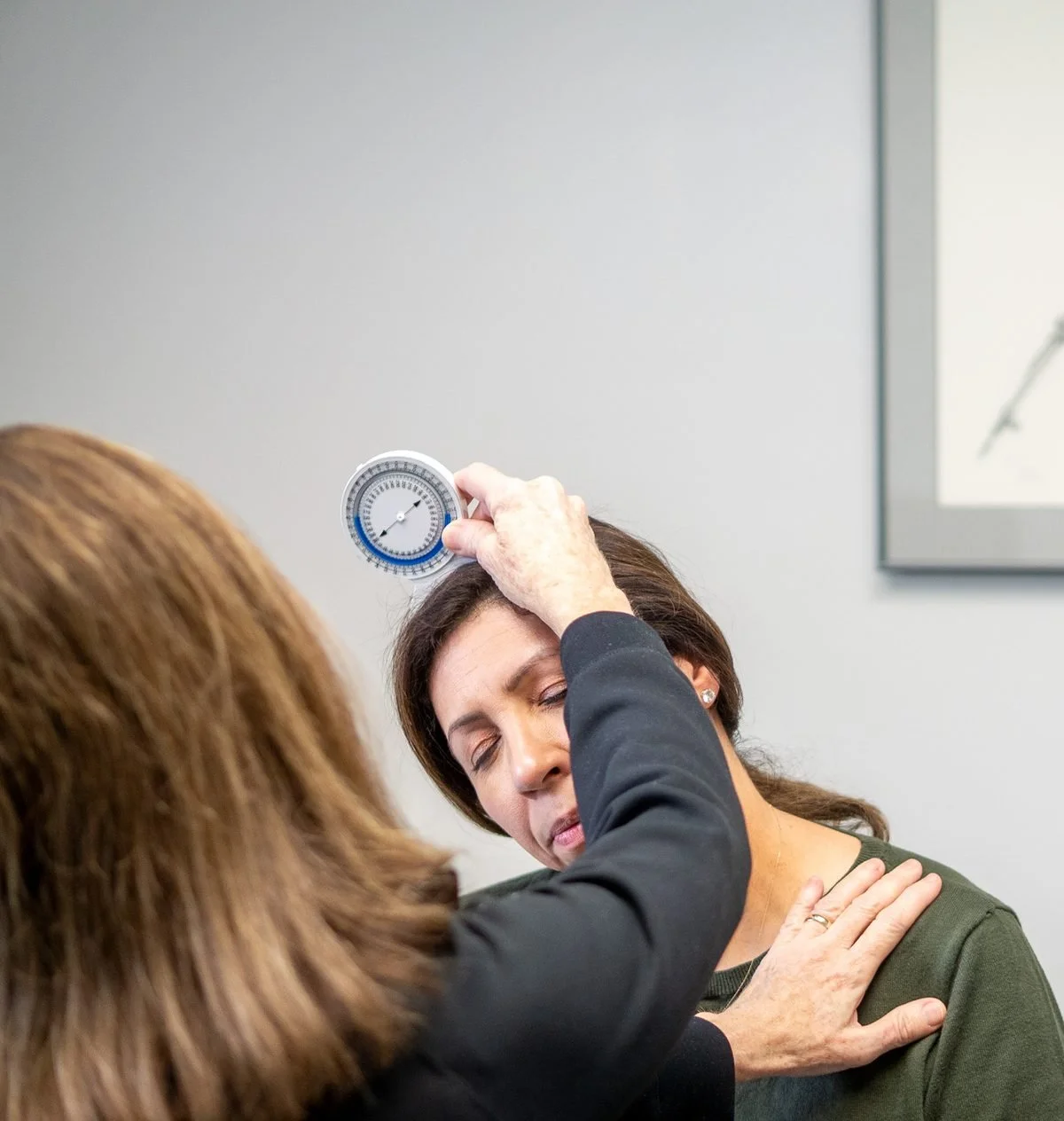
What causes it?
There's often no single cause. A mix of factors plays a part, including genetics, stress and how the body processes pain.3
Common contributors include:
- Clenching or grinding, during the day (often without noticing) or at night
- Teeth held together or the tongue pushing forward at rest, so the jaw muscles never fully relax
- Posture and daily setup, like long hours at a screen, sleep position and how you sit to drive
- Neck stiffness or pain, since trouble in the neck often shows up in the jaw
- An injury, such as a blow to the jaw, whiplash or a long dental procedure with the mouth held open
- Stress and poor sleep, which both raise muscle tension and lower pain tolerance
Research hasn't shown that a "bad bite" or past orthodontic treatment causes TMD.3
How physical therapy helps
- Calm painEase sore jaw muscles and irritated joints.
- Restore comfortable jaw movementOpen, chew and talk without pain or catching.
- Change the habits that keep symptoms goingClenching, jaw rest position, posture and sleep.
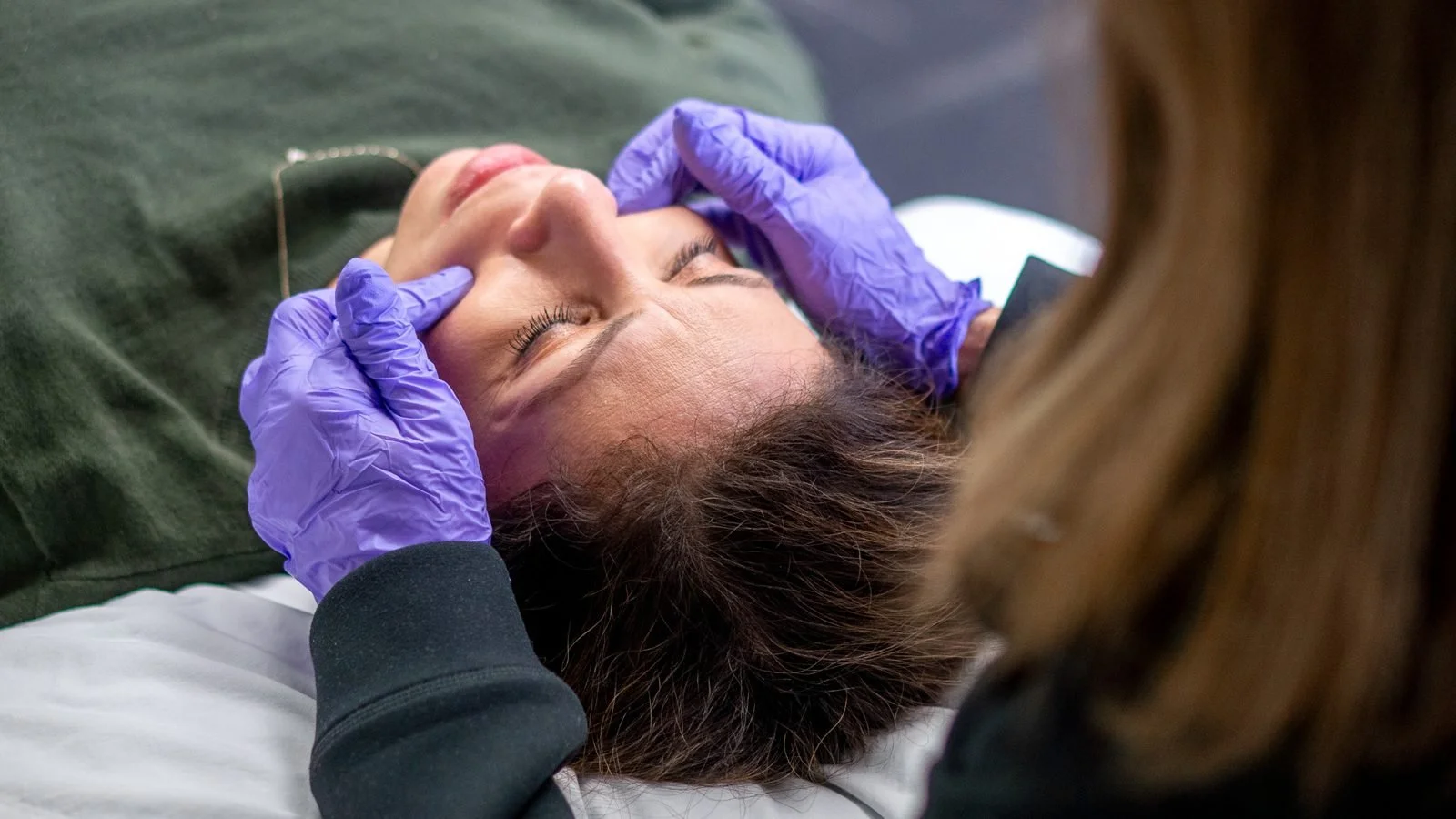
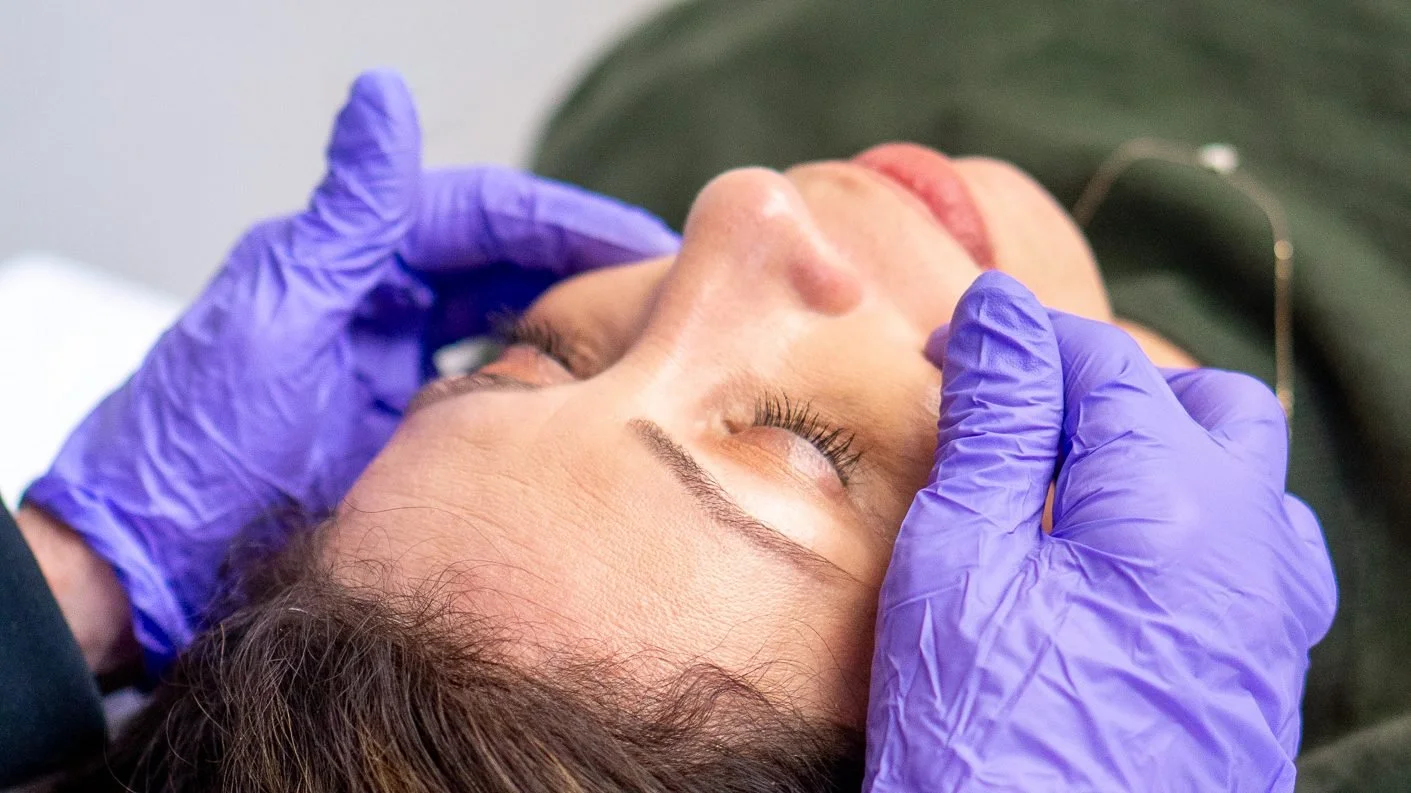
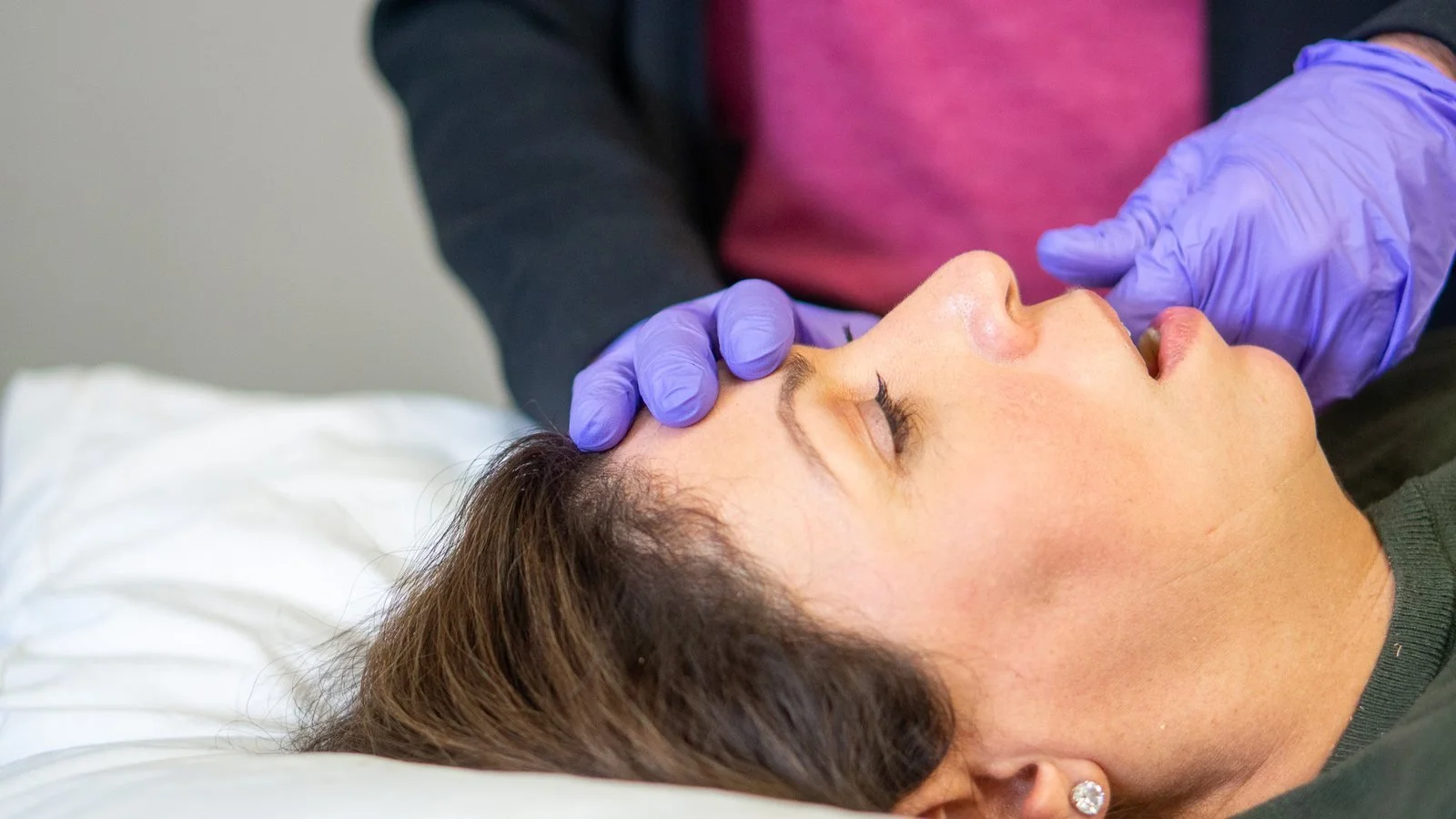
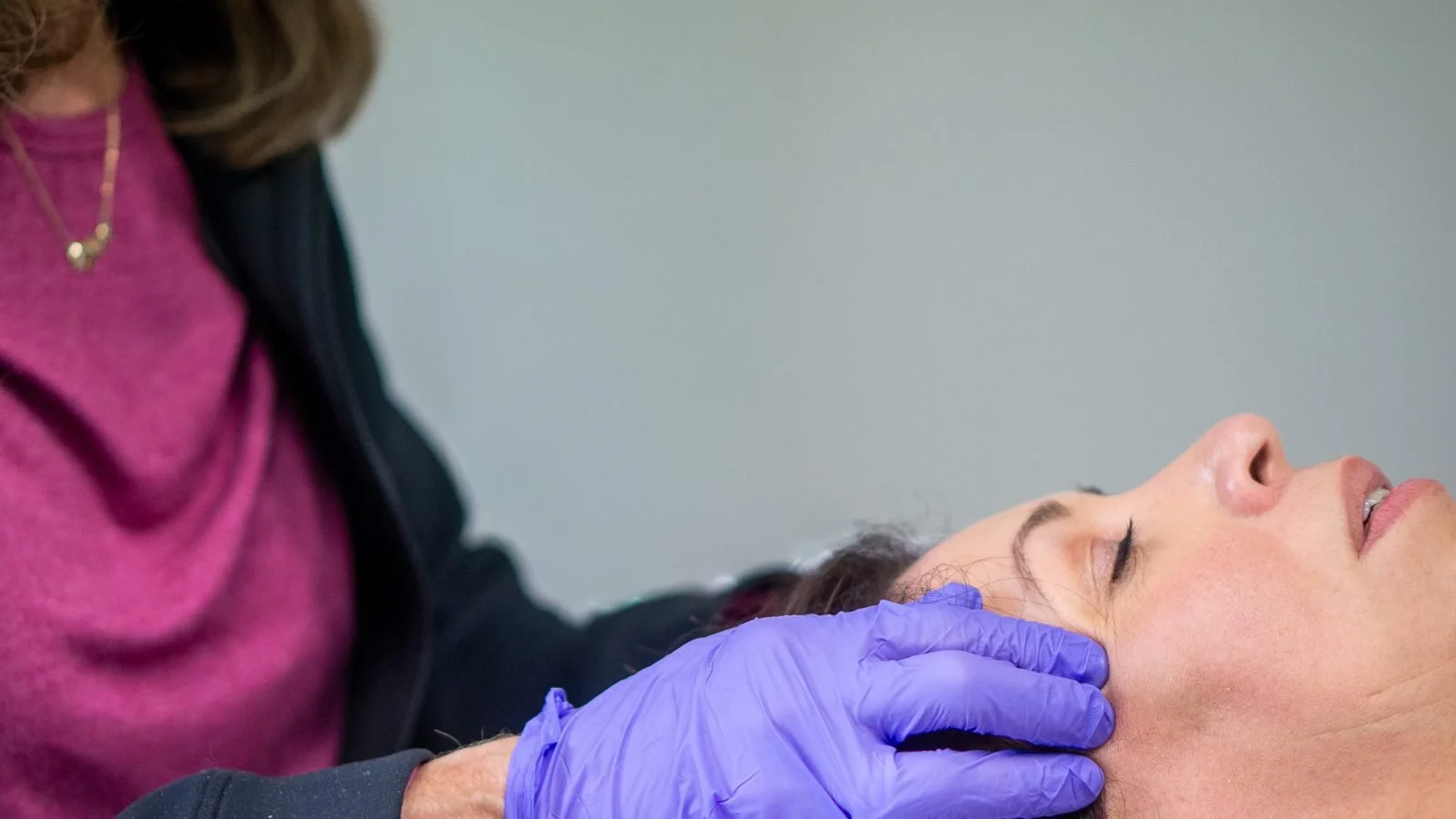
Your care may include:
Joint mobilization
Gentle, guided movement of the jaw joint to restore smooth opening.
Muscle and trigger point work
Hands-on release of overworked muscles, outside and inside the mouth.
Dry needling
A fine needle used to release trigger points and ease muscle pain.
Neck and upper back function
Manual therapy and exercise where neck stiffness feeds jaw and head pain.
Jaw exercises and habits
Better control and comfortable opening, plus where your jaw should rest and how to catch clenching.
A home program
Self-treatment for flare-ups, so you aren't relying on visits.
What the research shows
A 2023 analysis of 233 clinical trials ranked hands-on jaw mobilization and trigger point therapy among the most effective treatments for long-lasting TMD pain.1
Jaw exercise reduces pain and helps people open wider.2 Early studies show dry needling eases TMD muscle pain about as well as manual therapy.4
The National Institutes of Health's dental research institute recommends conservative, reversible treatment first, and advises against treatments that permanently change the teeth, bite or jaw joints unless there's a clear reason.3
The short answer?Physical therapy is one of the conservative first steps, and it works alongside care from your dentist.
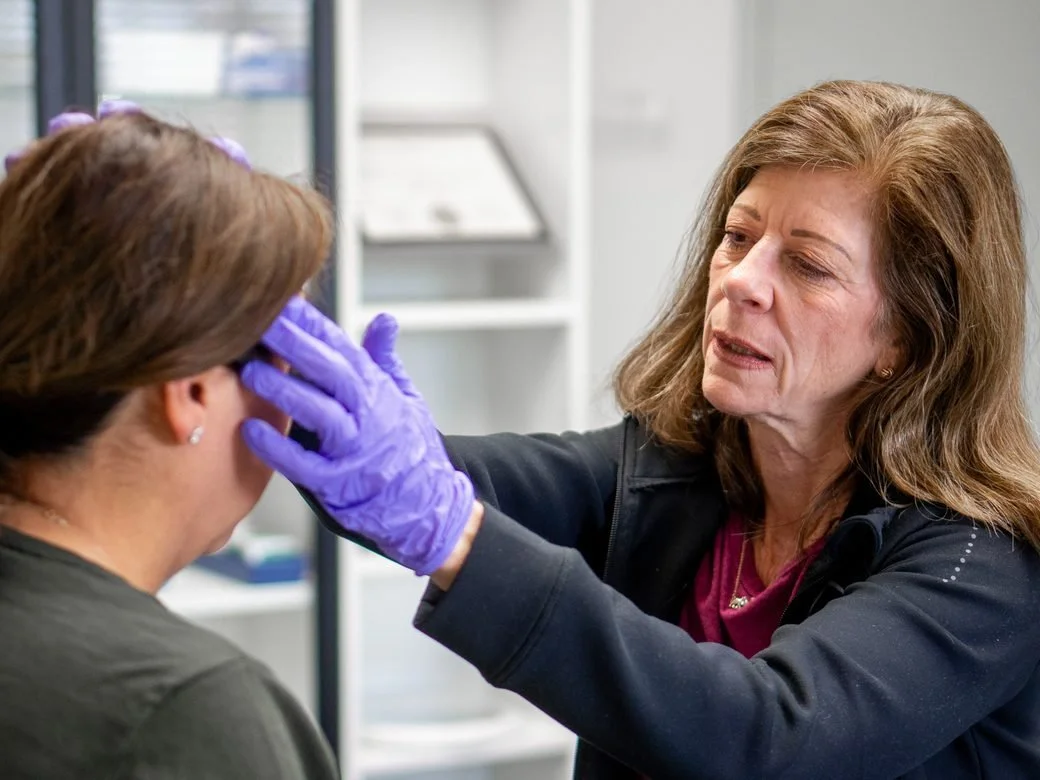
Jaw pain and headaches
The jaw, neck, and head share muscles and nerve pathways.
So a problem in one area often shows up as pain in another. People with TMD commonly get headaches at the temples, on waking or with neck stiffness.
Tension-type headaches and those that start in the neck often respond well to physical therapy. For migraine, physical therapy can be one part of a plan with your physician, especially when neck or jaw tension is a trigger.
When to see your dentist or doctor first
Some jaw and face pain needs a different kind of care first.
See your dentist or doctor before starting physical therapy if you have:
- Tooth pain, a cracked tooth, or signs of a dental infection
- Swelling, redness or fever around the jaw
- Jaw pain after a hard blow or fall, where a fracture is possible
- New numbness in the face, or a new lump
- Ear pain with drainage, or a change in your hearing
- A sudden change in how your teeth fit together
Meet your TMJ specialist
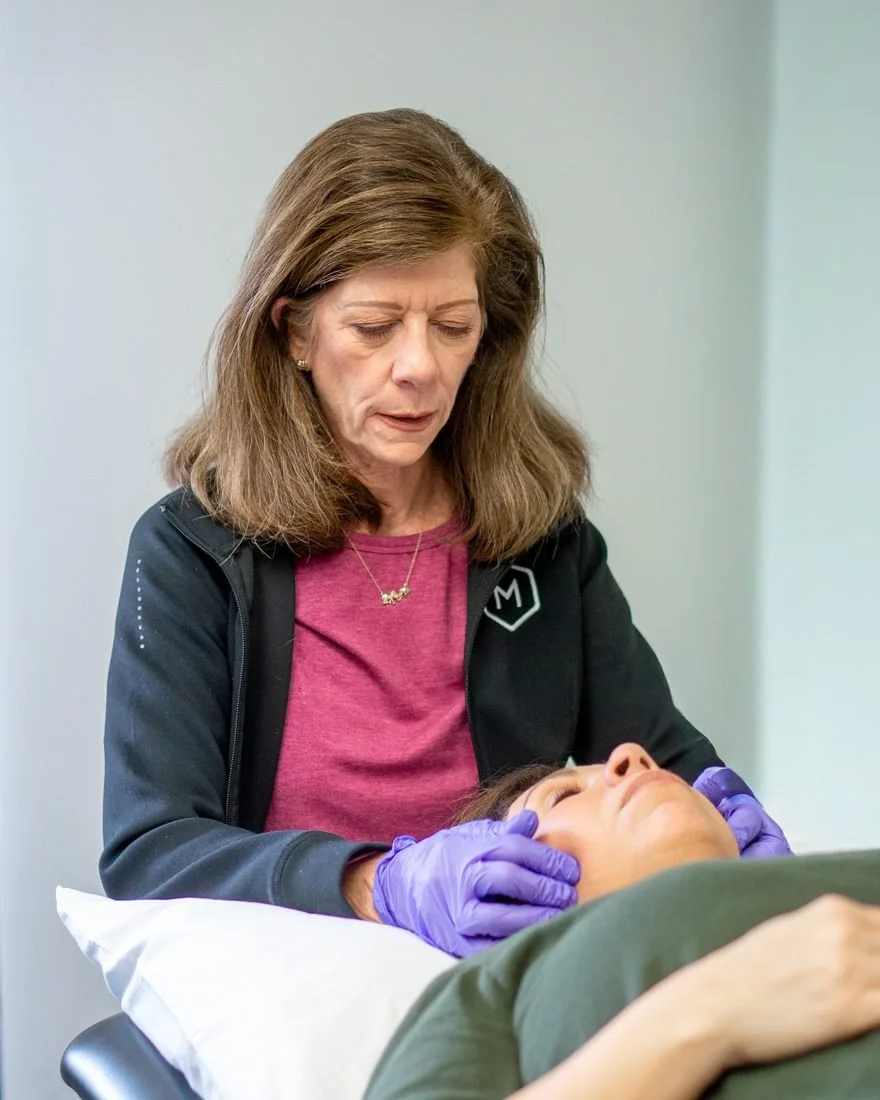
Melissa Stack, PT
Jaw pain, TMJ and orofacial pain40+ years of clinical experience
Jaw pain, TMJ disorders and headaches have been the focus of Melissa's work for four decades. Over that time she has taught physical therapy and dental students at UT Health San Antonio, and she now lectures on TMD for dental teams, physical therapists and patients (request more information).
Headaches and migraines are a big part of her practice, too.
Many of her patients come to her after seeing several specialists without a clear answer. Her approach looks at the whole person, from posture and sleep to the stress that so often comes with jaw pain. She treats patients from age 10 to 102!
Throughout care, she works closely with her patients' dentists, orthodontists, ENTs and physicians.
TMD is personal for Melissa as well: she has it herself, and stays symptom-free with the same self-care she teaches.
"Melissa Stack at Method Wellness is the most amazing physical therapist! She has completely changed my life for the better. I used to have daily headaches and jaw pain, and now I rarely have them."
Miranda C.
"After a 2 hour infected root canal in my tooth... my TMJ was terrible... She helped me 100% with the dry needling. She is a life saver!"
Gail B.
"Melissa is so caring & professional. Her knowledge is amazing & has been so helpful. I have really appreciated all her help."
Roxanne K.
Common questions
Can physical therapy help TMJ?
Yes. Physical therapy is one of the conservative treatments recommended for TMJ disorders (TMD), and hands-on jaw treatment and jaw exercise are among the best-supported options for TMD pain.
Does dry needling help TMJ?
It can help when tight, painful muscles are part of the problem. Studies suggest it eases TMD muscle pain about as well as hands-on manual therapy, and it's used as one part of a plan rather than on its own.
My jaw clicks. Do I need treatment?
Not always. Clicking without pain is common and usually doesn't need treatment. If it clicks and hurts, catches, or locks, it's worth having it checked.
My ear hurts, but my ears are fine. Could it be my jaw?
It could. The jaw joint sits right in front of the ear, and TMD often causes ear pain or a feeling of fullness. It's still worth having your ears checked by your doctor first.
I grind my teeth at night. Do I still need a night guard?
That's a question for your dentist. Physical therapy works alongside a night guard: it treats the sore muscles and joints and helps with daytime clenching and other habits.
Can physical therapy help migraines?
It can be one part of a plan with your physician, especially when neck or jaw tension is a trigger. Tension-type headaches and those that start in the neck often respond well to physical therapy.
What happens on the phone consultation?
It's free! You tell us what's going on and ask anything you like, and we'll help you decide whether a visit makes sense. If physical therapy isn't the right place to start, we'll say so.
Sources
- Yao et al. Management of chronic pain secondary to temporomandibular disorders: a systematic review and network meta-analysis of randomised trials. BMJ. 2023. doi.org/10.1136/bmj-2023-076226
- Idáñez-Robles et al. Exercise therapy improves pain and mouth opening in temporomandibular disorders: a systematic review with meta-analysis. Clin Rehabil. 2023. doi.org/10.1177/02692155221133523
- National Institute of Dental and Craniofacial Research. TMD (Temporomandibular Disorders). nidcr.nih.gov/health-info/tmd
- Menéndez-Torre et al. Effectiveness of deep dry needling versus manual therapy in the treatment of myofascial temporomandibular disorders: a systematic review and network meta-analysis. Chiropr Man Therap. 2023. doi.org/10.1186/s12998-023-00489-x
Not sure where to start?
A phone consultation is free! We'll help you decide whether a visit makes sense.