PELVIC HEALTH • WOMEN + MEN
Pelvic Floor Physical Therapy in San Antonio
You’ve adjusted your life around it long enough.
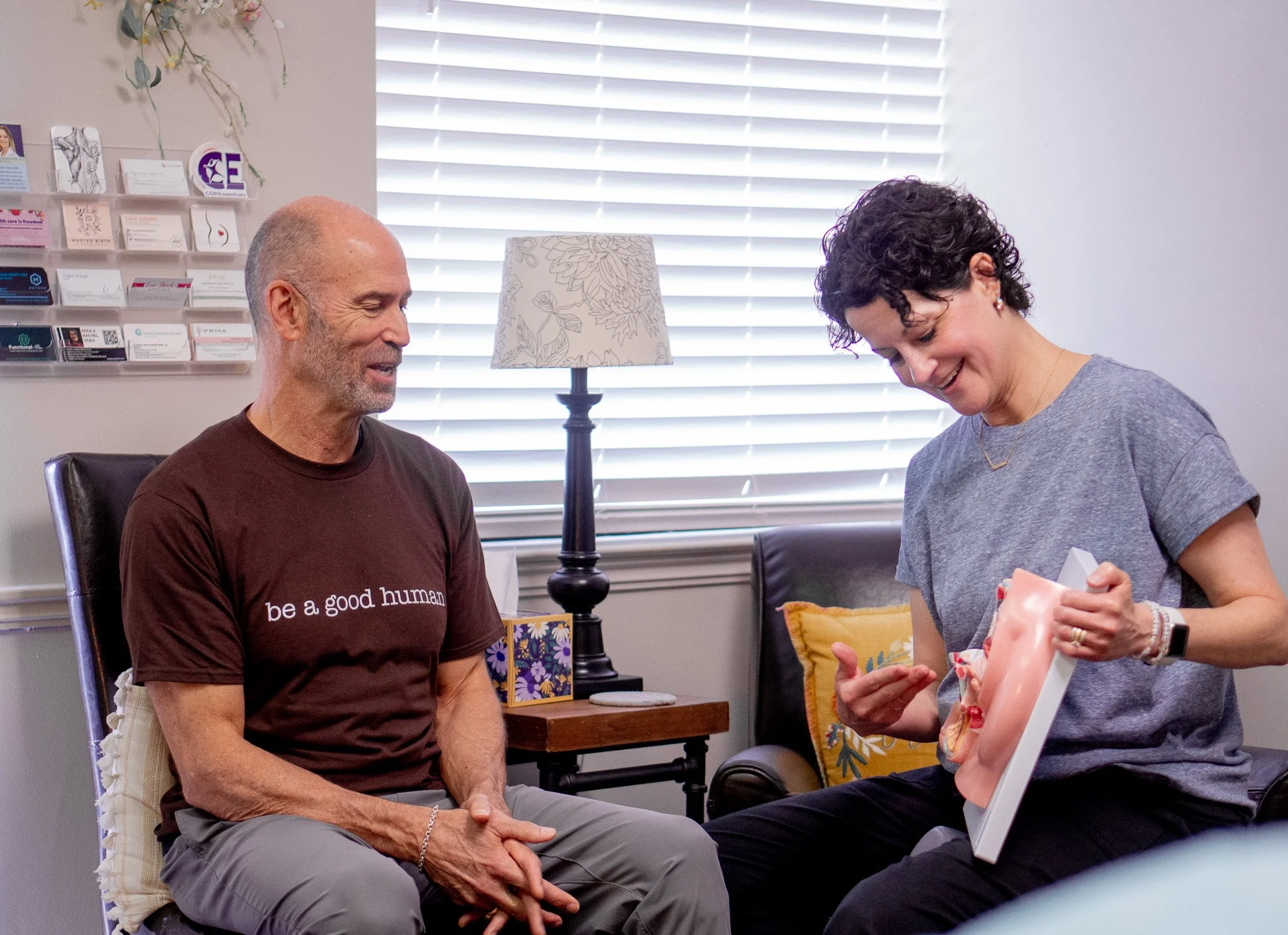
Bladder issues, pelvic pain, constipation, painful sex, changes after pregnancy or prostate treatment—whatever brought you here, you don’t have to know exactly what’s wrong.
Jennifer Duggins, PT brings more than 30 years of experience to finding the connections others may miss—and helping women and men get back to living without constantly thinking about their symptoms.
or call (210) 526-2428

Maybe you don’t think of yourself
as a “pelvic floor patient.”
Most people don’t.
Maybe you just know you’re planning your day around bathrooms.
Running, jumping, coughing, or laughing isn’t as carefree as it used to be.
Sex hurts.
Your back or hips keep bothering you despite everything you’ve tried.
Something changed after pregnancy, menopause, or prostate surgery.
Or every test says you’re fine—but you don’t feel fine.
That’s where we start.
“I thought this was just something I had to live with.”
You’d be surprised how often we hear that.
Pelvic floor dysfunction can show up as bladder, bowel, sexual, abdominal, hip, back, or pelvic symptoms—and those symptoms don’t always point obviously to the pelvic floor.
-
Leakage or urinary incontinence
Urinary urgency and frequent urination
Difficulty emptying the bladder
Persistent “UTI-like” symptoms despite negative testing
-
Constipation or difficulty emptying
Pelvic pressure or heaviness
Pelvic organ prolapse
Pelvic, genital, or abdominal pain
-
Pain with intercourse
Sexual dysfunction
Male pelvic or genital pain
Changes in sexual function following prostate treatment
-
Pregnancy and postpartum recovery
Core and pelvic floor changes after childbirth
Perimenopause and menopause
Pre- and post-prostatectomy rehabilitation
-
Chronic hip or back pain
Hypermobility and EDS/HSD
Persistent symptoms that haven’t fully responded to traditional treatment
Symptoms involving multiple systems with no clear explanation
See yourself somewhere on this list? Let’s talk.
Does pelvic floor therapy mean an internal exam?
Not necessarily.
An internal pelvic floor assessment can provide useful information for some conditions, but it is never required.
There is an enormous amount Jennifer can assess and treat externally.
She’ll explain your options, answer your questions, and make recommendations—
but you are always in control of what happens during your appointment.
No surprises. No pressure.
Treatment looks different at Method
More than just Kegels
-
Your pelvic floor works as part of a much larger system involving your diaphragm, abdominal wall, rib cage, spine, hips, nervous system, pressure management, movement patterns—and the ways your body has learned to compensate over time.
That’s why pelvic floor treatment at Method doesn’t begin and end with Kegels.
Sometimes a pelvic floor needs strength.
Sometimes it needs to relax.
Sometimes the problem is coordination.
And sometimes the most important clue isn’t in the pelvis at all.
Jennifer looks at the whole picture to understand why your body is responding the way it is, then builds treatment around what your system actually needs.
Meet Jennifer Duggins, PT
-
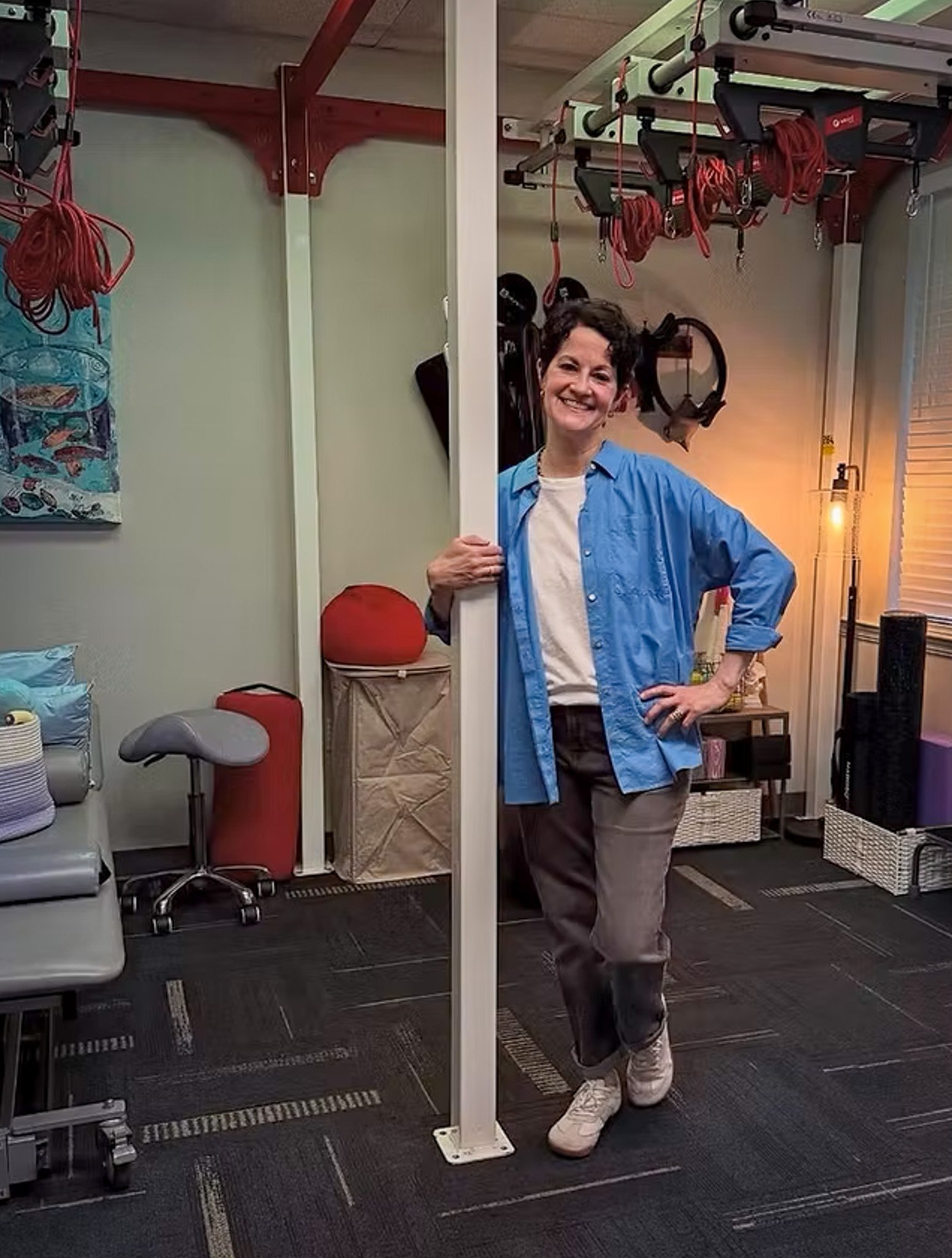
Jennifer has practiced physical therapy for more than 30 years and has specialized in pelvic health for more than two decades—long before pelvic floor therapy became something people regularly talked about.
Her experience spans pelvic health, orthopedics, neurological care, trauma, complex medical conditions, and post-surgical rehabilitation.
That breadth matters.
It allows Jennifer to recognize connections between symptoms that can be missed when the pelvic floor is considered in isolation.
Today, she treats women’s and men’s pelvic health, pregnancy and postpartum concerns, prostate recovery, bowel and bladder dysfunction, pelvic and sexual pain, hypermobility, and complex persistent symptoms.
And she’s the kind of person you can talk to about the thing you’ve been avoiding talking about; there is very little you can tell her that will surprise her.
Our personalized approach
-
Treatment should make sense for your body. There isn’t one pelvic floor treatment—and there shouldn’t be.
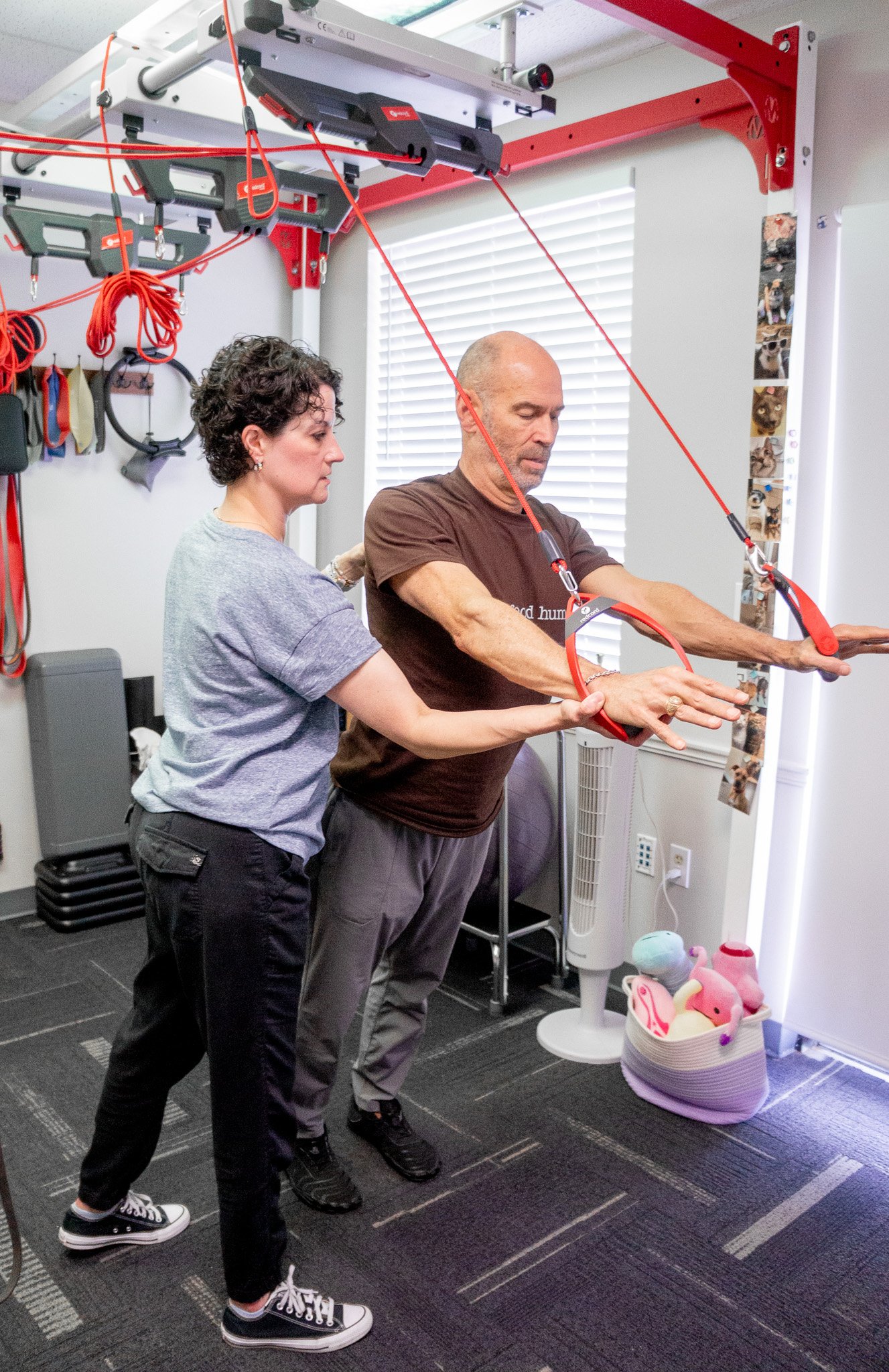
Depending on what Jennifer finds, your care may include hands-on manual and myofascial techniques, neuromuscular retraining, breathing and pressure-management strategies, individualized movement and exercise, dry needling, yoga-informed care, behavioral and lifestyle strategies, and Redcord® Neurac therapy.
The goal isn’t to throw more treatments at a symptom.
It’s to understand what’s driving it and choose the tools that make sense for you.
A different way to find what’s compensating.
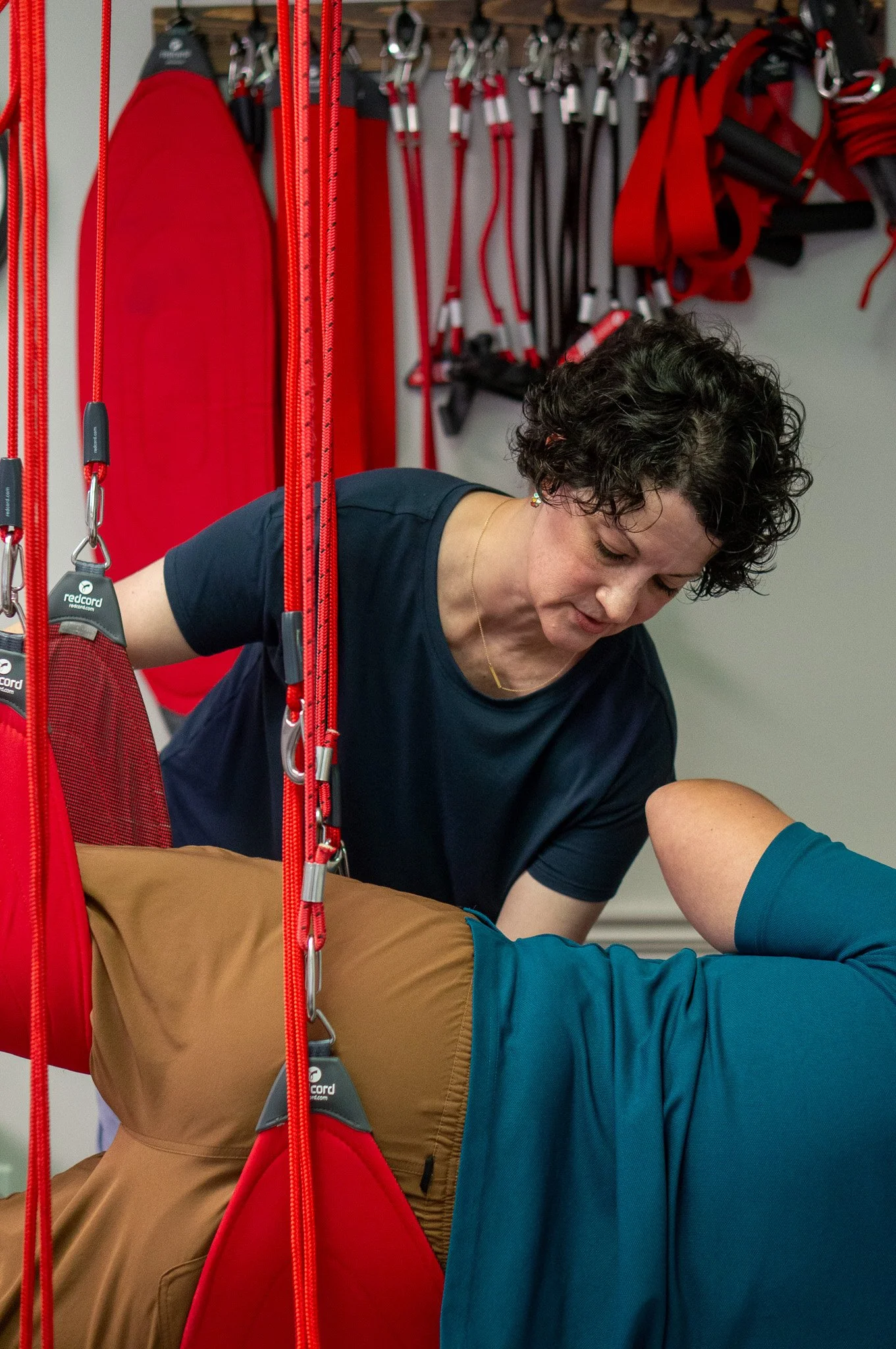
Redcord is especially valuable for complex or persistent problems because it allows Jennifer to reduce the body’s usual compensation strategies and better understand how your neuromuscular system is actually working.
It’s highly individualized, hands-on work that requires time, expertise, and thoughtful clinical reasoning—which is one reason it isn’t commonly offered.
For someone who has spent months or years treating the same painful area without lasting change, that can reveal a very different place to start.
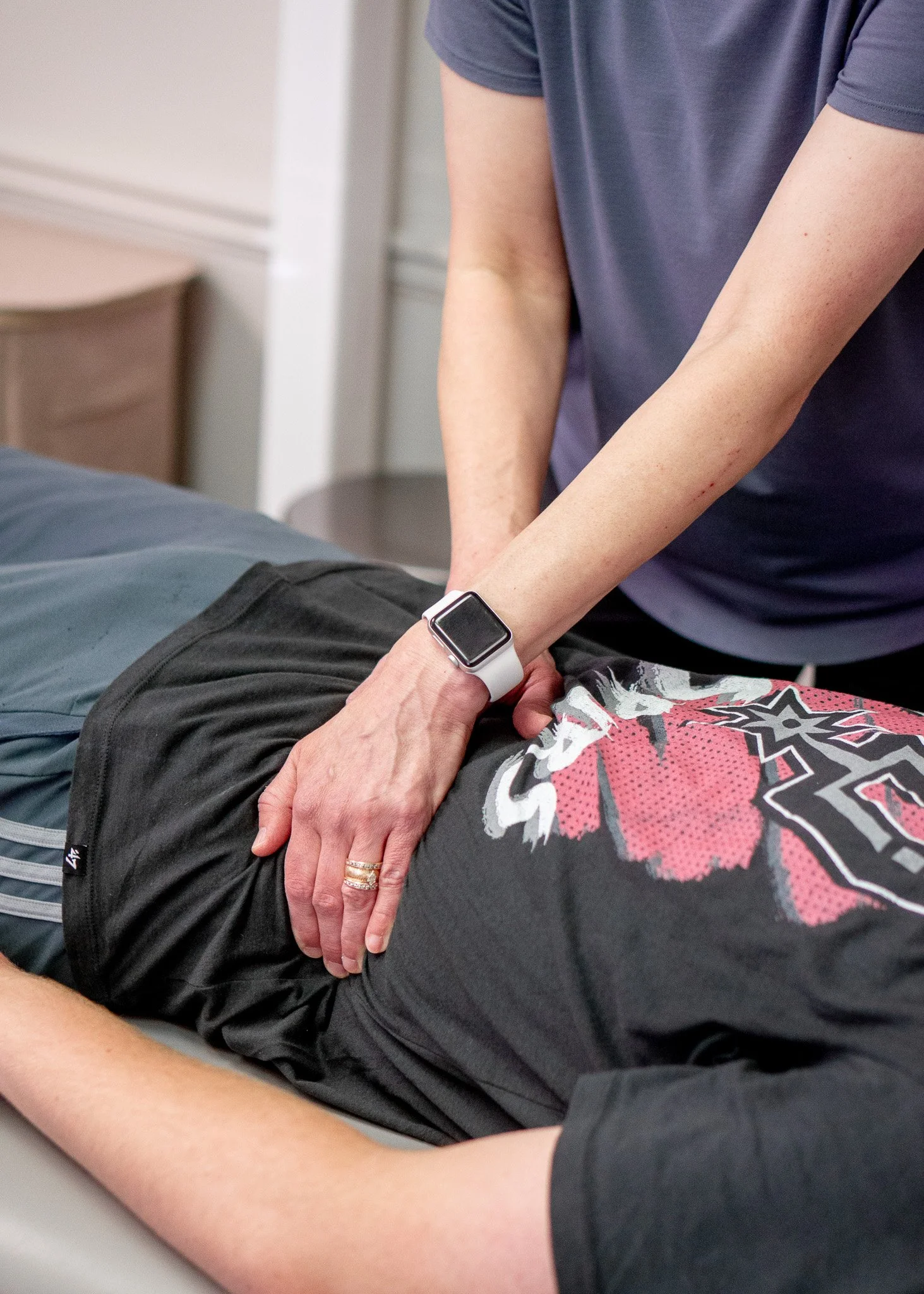
Pelvic Health
is for Men, too.
Urinary changes. Pelvic or genital pain. Sexual dysfunction. Persistent prostatitis-like symptoms. Changes surrounding prostate surgery.
They’re not exactly easy things to bring up.
But they’re health issues—and Jennifer treats them every day.
Pelvic floor physical therapy for men can address urinary urgency and frequency, pelvic pain, sexual dysfunction, bowel concerns, chronic prostatitis-type symptoms, and recovery before and after prostatectomy.
-
You don’t have to wait until afterward to begin.
Pre-operative pelvic floor physical therapy gives Jennifer an opportunity to establish your baseline, teach proper pelvic floor coordination before you’re recovering from surgery, and prepare you for post-operative continence rehabilitation.