
Pelvic floor physical therapy for men
Let's talk about something men rarely talk about.
Bathroom urgency, pelvic pain, changes in sexual function, recovery after prostate surgery.
They're common, they're rarely talked about, and they're often very fixable.
5.0 · 160+ Google reviews
Having prostate surgery? Start here"I've dealt with this for years and never told anyone."
We hear that a lot. These aren't things you just have to live with.
The pelvic floor is a group of muscles that supports bladder, bowel and sexual function. Like any muscles, they can get too tight, too weak, or stop coordinating well. And like any muscles, they can be retrained.
Do any of these sound like you?
- You plan your day around bathrooms.
- You get up two or three times a night.
- Long drives or meetings are hard to sit through.
- Something changed with sex, and no one has explained why.
- You're facing prostate surgery and wondering what recovery will really look like.
What we treat
Bladder
- Urgency and frequency
- Getting up at night
- Leaking or after-dribble
- Weak stream or trouble emptying
Pelvic pain
- Chronic prostatitis / chronic pelvic pain
- Pain in the testicles, penis, perineum or tailbone
- Pain with sitting
Sexual health
- Erectile dysfunction
- Pain with or after ejaculation
- Premature ejaculation
Bowel
- Constipation and straining
- Incomplete emptying
Facing prostate surgery?Start before day one.
Most men don't hear about pelvic floor therapy until they're already dealing with leakage after surgery.
Before surgery
- Know your baseline. How your bladder and pelvic floor work before anything changes.
- Learn the right technique. Practice while you feel well, not while you're recovering.
- Have a plan ready. You'll know what to do when the catheter comes out.
After surgery
- Regain bladder control with a program that progresses as you heal.
- Manage pressure when you cough, lift and stand up.
- Address sexual function as part of recovery, not an afterthought.
Why start before surgery?
You're ready when the catheter comes out.
You go into surgery already knowing what to do, so you're not starting from scratch.
Bladder control can come back sooner.
Several studies show that men who train beforehand tend to regain bladder control sooner in the first few months.
Ask your urologist about a pre-surgery visit, or call us directly at (210) 526-2428.
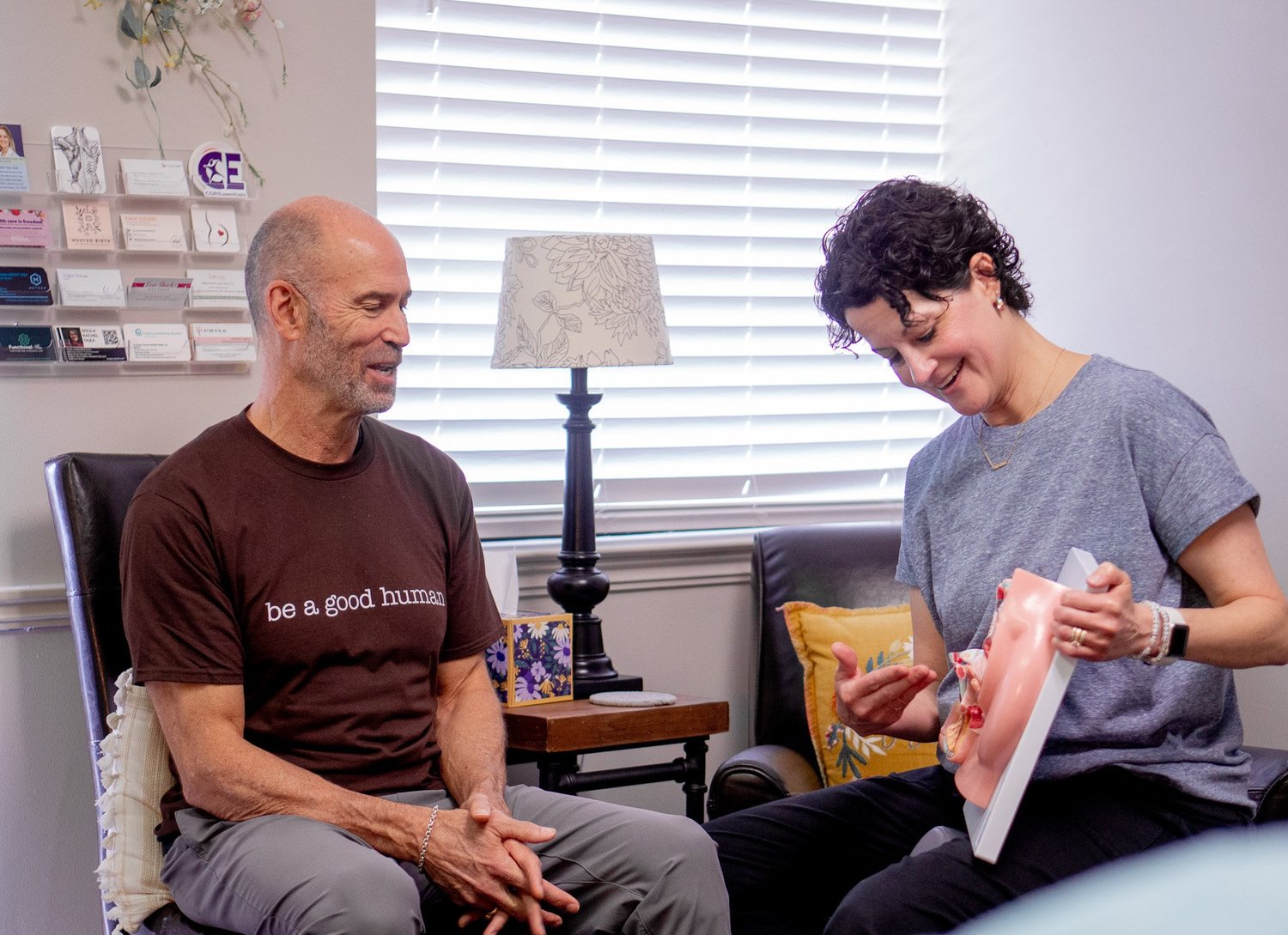
Your first visit starts with a conversation
01
We talk
Your symptoms, history, goals and what you've already tried. Nothing is too awkward. We've heard it before.
02
We assess
Posture, breathing, movement, hips, back and abdomen, plus pelvic floor function as appropriate.
03
We make a plan
You leave understanding what's likely driving your symptoms and what to start doing about it.
An internal exam is never required
Much of our assessment and treatment is done externally.
If an internal exam could add useful information, we'll explain why and what's involved. It's always your choice.
Telehealth visits are available
30-minute video visits, from home.
On your phone consultation, we'll help you decide whether telehealth or an in-person visit fits what you need.
"Everything looks normal." But it doesn't feel normal.
Scans, cultures, PSA tests and antibiotics look for structural problems and infection.
They don't measure how your muscles coordinate, how you manage pressure, or how a sensitized nervous system can amplify bladder and pelvic signals. That's where we look.
How we treat
- Redcord / Neurac sling therapyRetrains how your core and pelvic floor work together while you move
- Pelvic floor coordinationLearning to relax as well as contract
- Dry needlingEases tight, overactive muscles
- Manual and visceral therapyHands-on work for muscles, connective tissue and the abdomen
- Bladder and bowel retrainingHabits and timing that calm urgency
More than Kegels
Many men with pelvic pain or urgency have a pelvic floor that's working too hard, not too little. Squeezing harder can make it worse.
Learning to relax and coordinate often makes the difference.
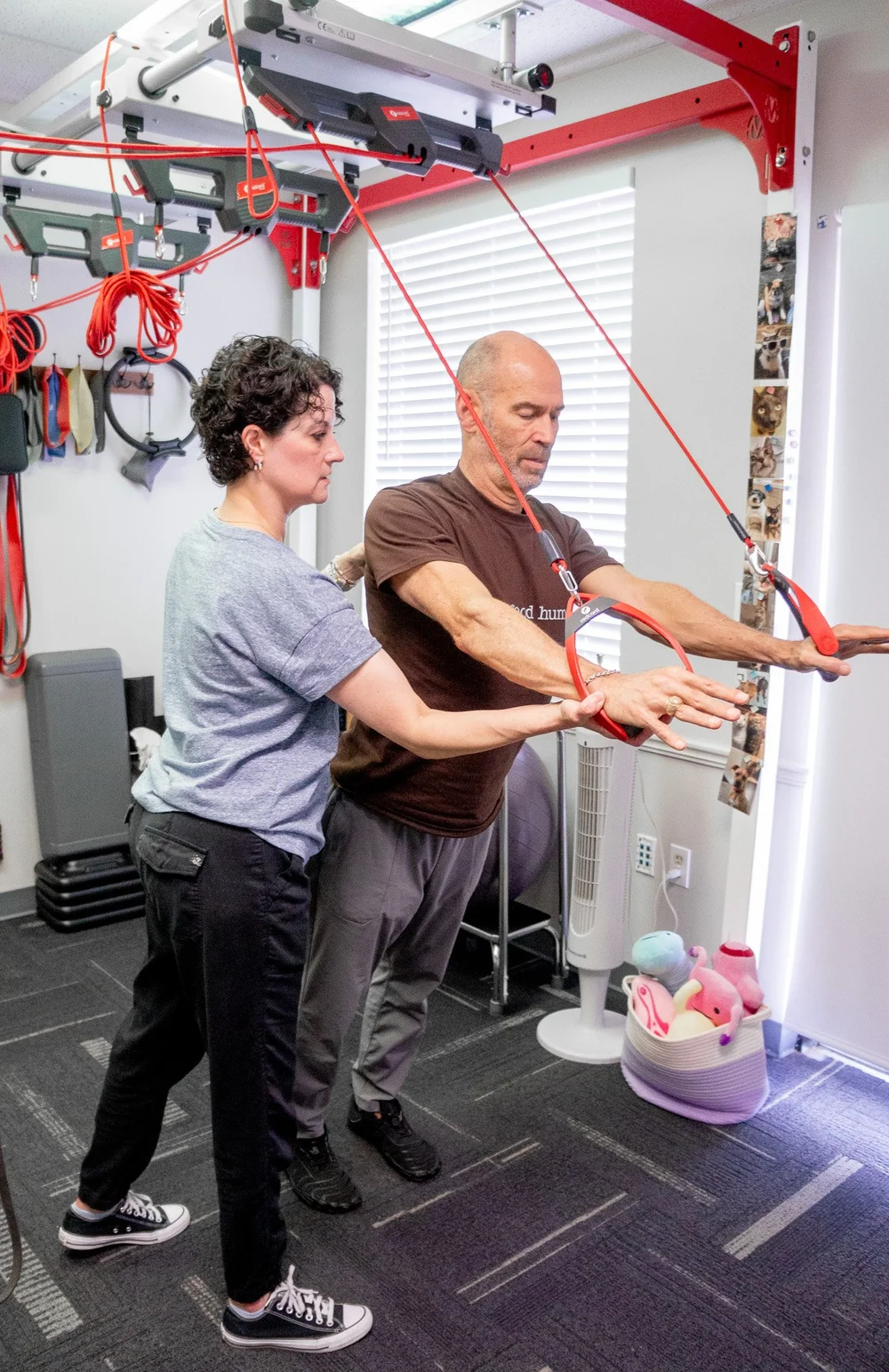

Jennifer Duggins, PT
Pelvic and orthopedic physical therapy
30+ years in practice, 20+ in pelvic health
Jen treats the pelvic floor and the rest of the body, so your bladder, bowel, sexual, hip and back symptoms are looked at together, not one at a time.
Your care is built around male anatomy, not adapted from a program designed for someone else.
Got other aches and pains?The rest of you is welcome too.
If you've also got a stiff back, a bad knee, or a shoulder that doesn't feel quite right, we're here for that.
At Method, our therapists treat the whole body.
You don't have to keep working around it!
Common questions
Do men really have a pelvic floor?
Yes! It supports bladder and bowel control, sexual function and core stability. And like any other muscles, it can get tight, weak or out of sync.
Isn't this just Kegels?
Not at all. Many men actually need to learn to relax their pelvic floor, not squeeze it harder. What we do is based on what your assessment shows, not a one-size-fits-all exercise.
Will I have to have an internal exam?
No, it's never required. Much of our work is external. If an internal assessment could help, we'll talk it through first, and it's always your choice.
Can I do a visit by telehealth?
Yes. Jen offers 30-minute telehealth visits for men's pelvic health. When you call, we'll help you figure out whether telehealth or an in-person visit makes the most sense for you.
I'm having prostate surgery. When should I come in?
Ideally 1 to 2 months before surgery, then again once your catheter is out and your surgeon clears you. The earlier you start, the more ready you'll be.
Do you take insurance?
Method is direct pay, so we don't bill insurance directly. We can give you the paperwork to submit for out-of-network reimbursement if your plan allows it.